Sports | Human Movement
Human Movement
Twelve years of climbing made me a specialist in a relatively narrow movement repertoire. Beyond climbing lies a much broader world of movement, with skills and problems that rarely appear on the wall.My movement practice started in 2023 at HiddenBody with Rich Andoh and Jori Meijer. There I learned a broader way of thinking about physical practice, working across strength, coordination, acrobatics, partner work and body awareness.
Practice
A Few Things I’m Practicing
A selection of skills and movement problems I have been working with.
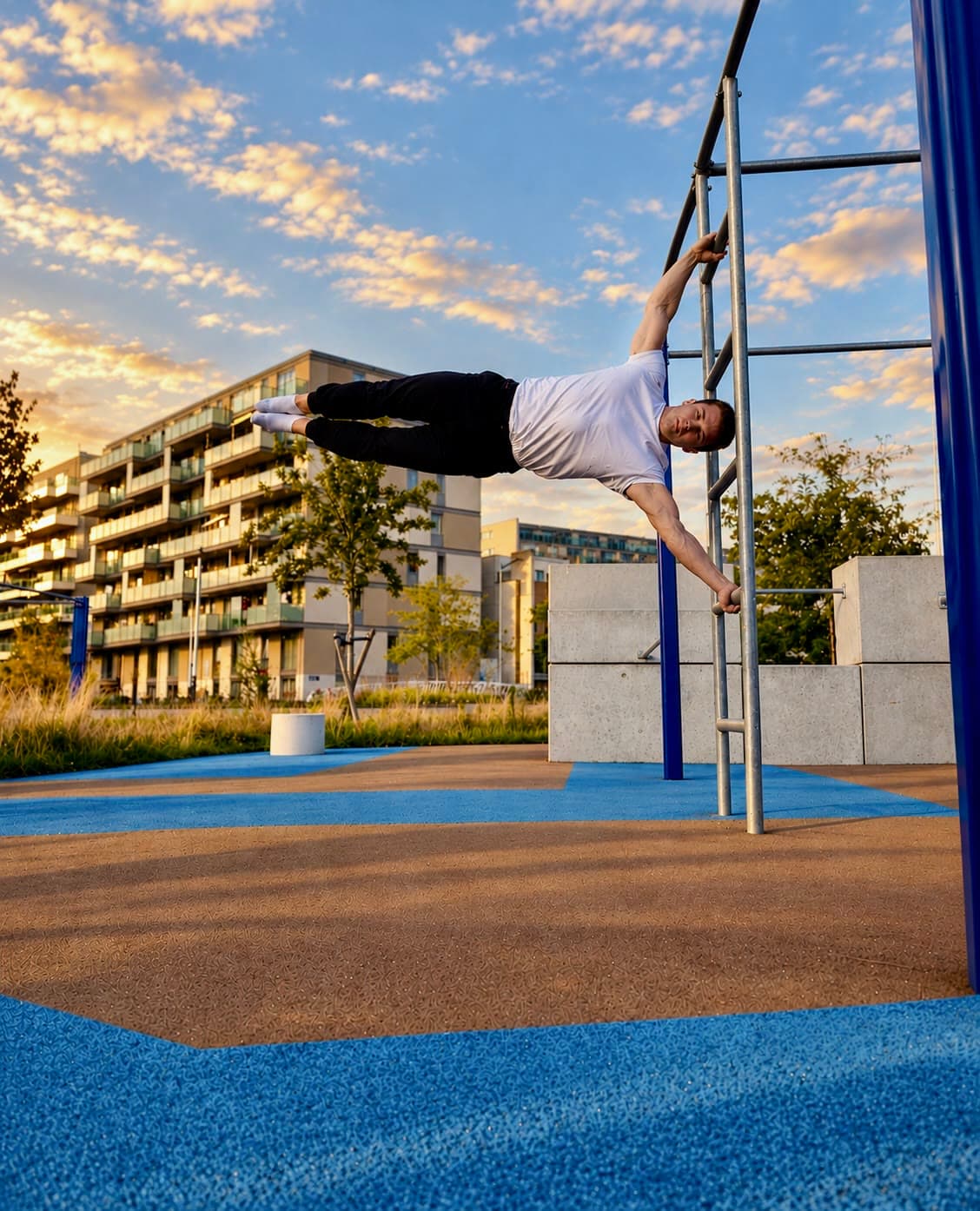
Human flag
Wall run
Front lever pull-up
Handstands
Rail balancing
One-arm pull-up
Bat hang
Muscle-ups
Beyond a single practice
Climbing taught me depth.
Movement is teaching me range.
Years of climbing taught me to refine a narrow set of problems to a very high level. Movement introduces unfamiliar tasks, different disciplines and new ways of coordinating the body. The aim is not to replace climbing, but to expand the physical vocabulary I can bring back to it.
Specialisation builds precision.
Variety builds adaptability.
In climbing I could return to the same problems until the response became precise. To develop skills outside that familiar domain, I have to accept becoming a beginner again. Movement deliberately puts me in situations I have not solved before, where learning the response is part of the practice.
The practice is organised around six fields.
The Six Fields
Human Movement is organised around six fields: Athletics, Acrobatics, Dance, Fighting, Awareness and Physical Preparedness.
Athletics
Moving the body through space with speed, coordination and control.
Running · Jumping · Displacement
Movement practice was brought into the open largely through Ido Portal’s Movement Culture. Marcello Palozzo made it concrete through the six defined fields, which form the structure of the Human Movement Studies programme I start in October 2026. I have trained across these fields since 2023; I did not define them.
What a movement practice looks like
A practice usually begins with a warm-up, followed by a main practice built around two of the six areas below, and finishes with a cool-down. The emphasis changes from session to session depending on what I am working on.
01
Strength & Mobility
Building a strong, resilient body that can move freely through its available range.
Examples
Pushing, pulling, squatting, lunging, hanging and active mobility work.
Common in gymnastics, calisthenics, strength training and athletics.
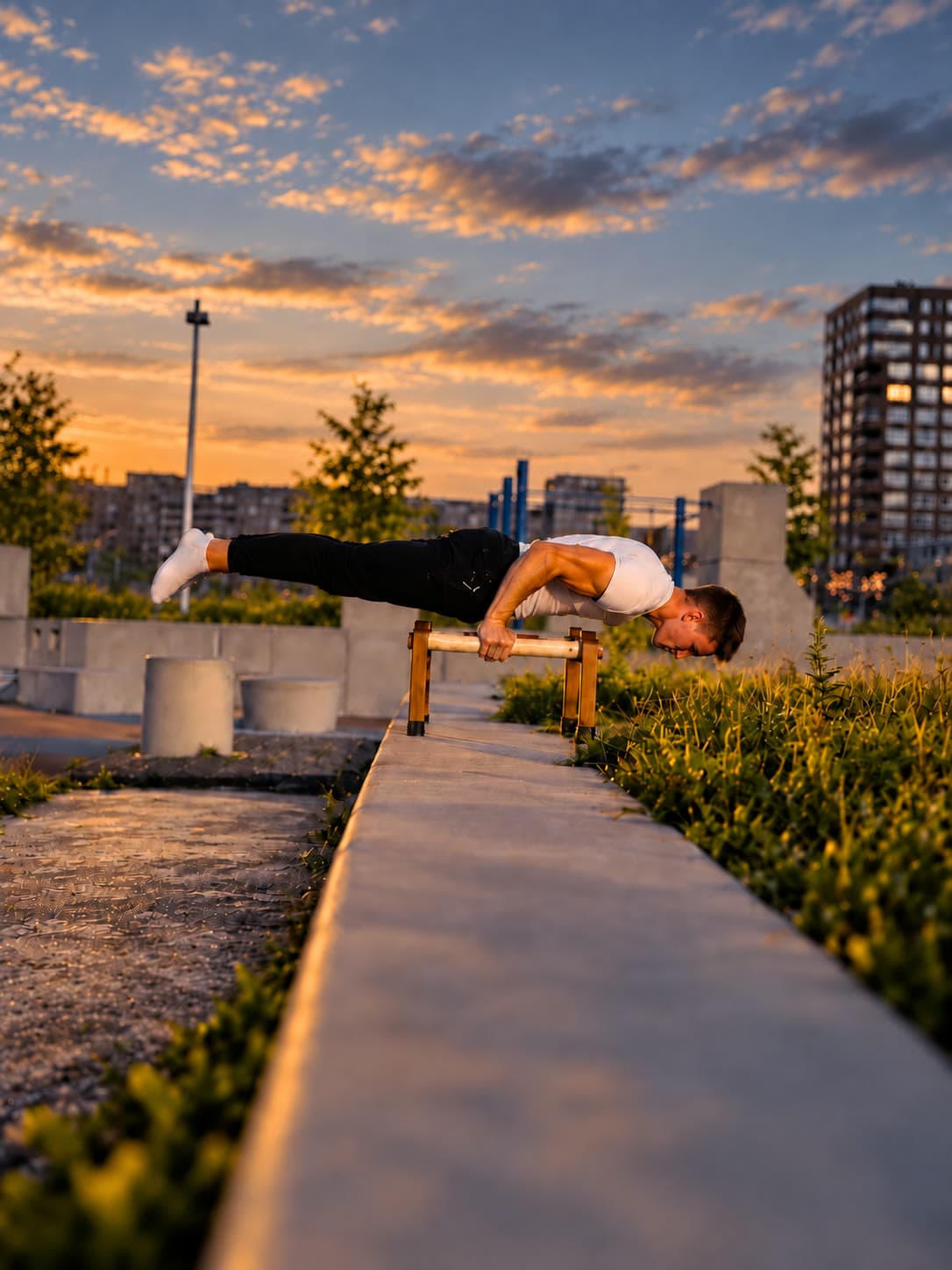
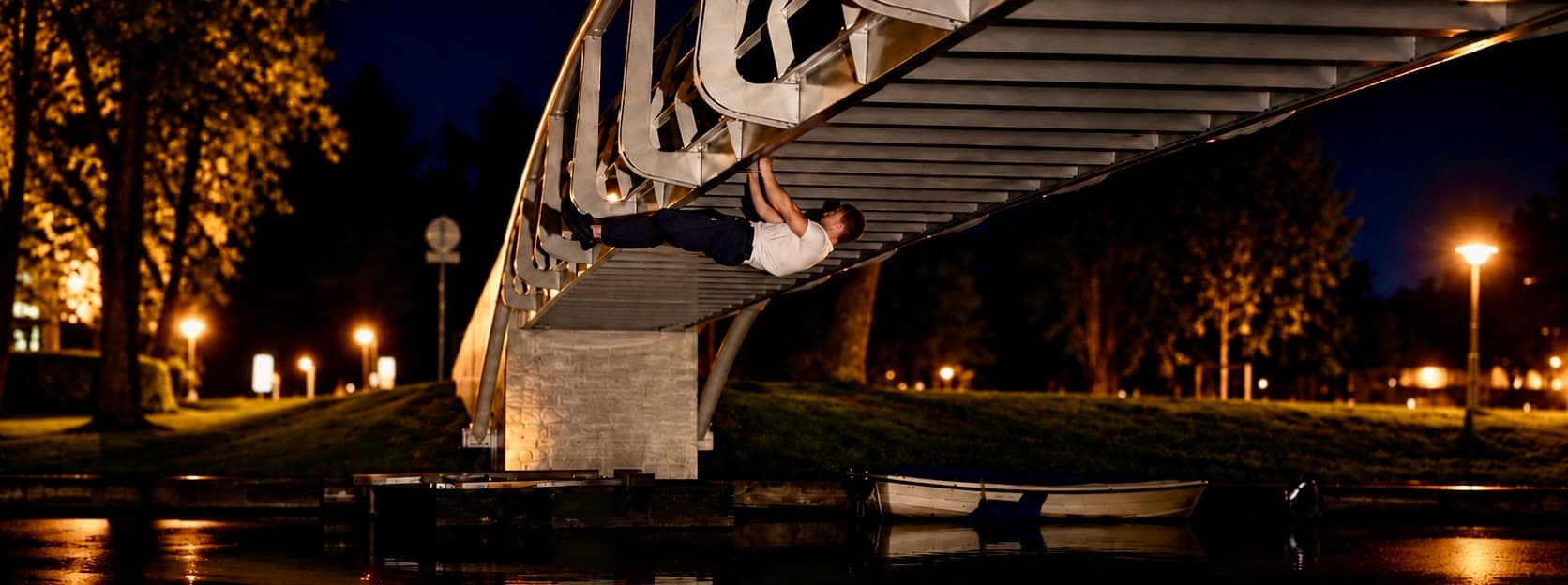
Bent-arm planche (90° hold) 02
Locomotion
Moving through space by continually shifting weight across the feet, hands and ground.
Examples
Sprinting, jumping, crawling, climbing, footwork, dancing and transitions.
Found across parkour, breakdance, capoeira, athletics and climbing.
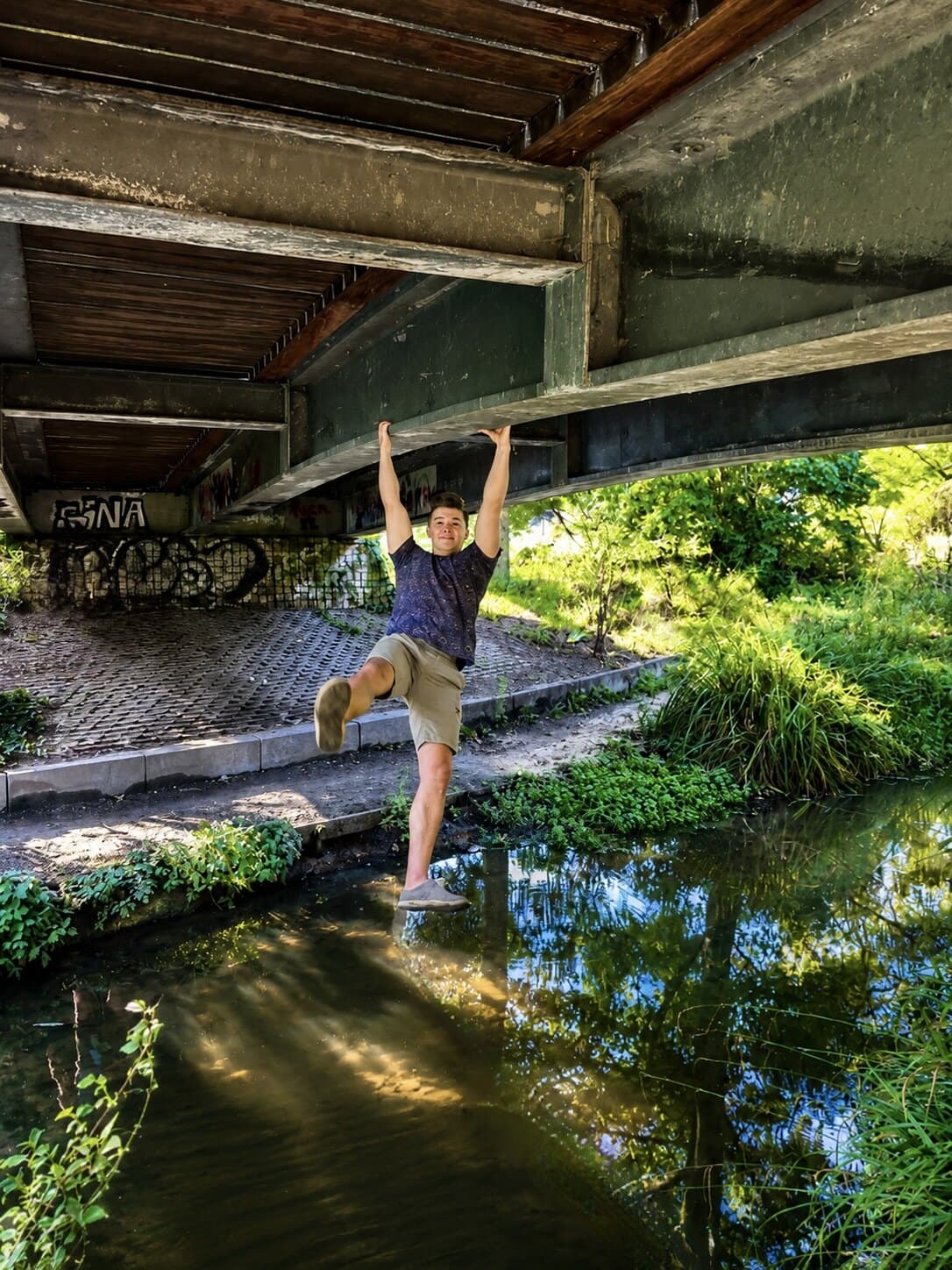
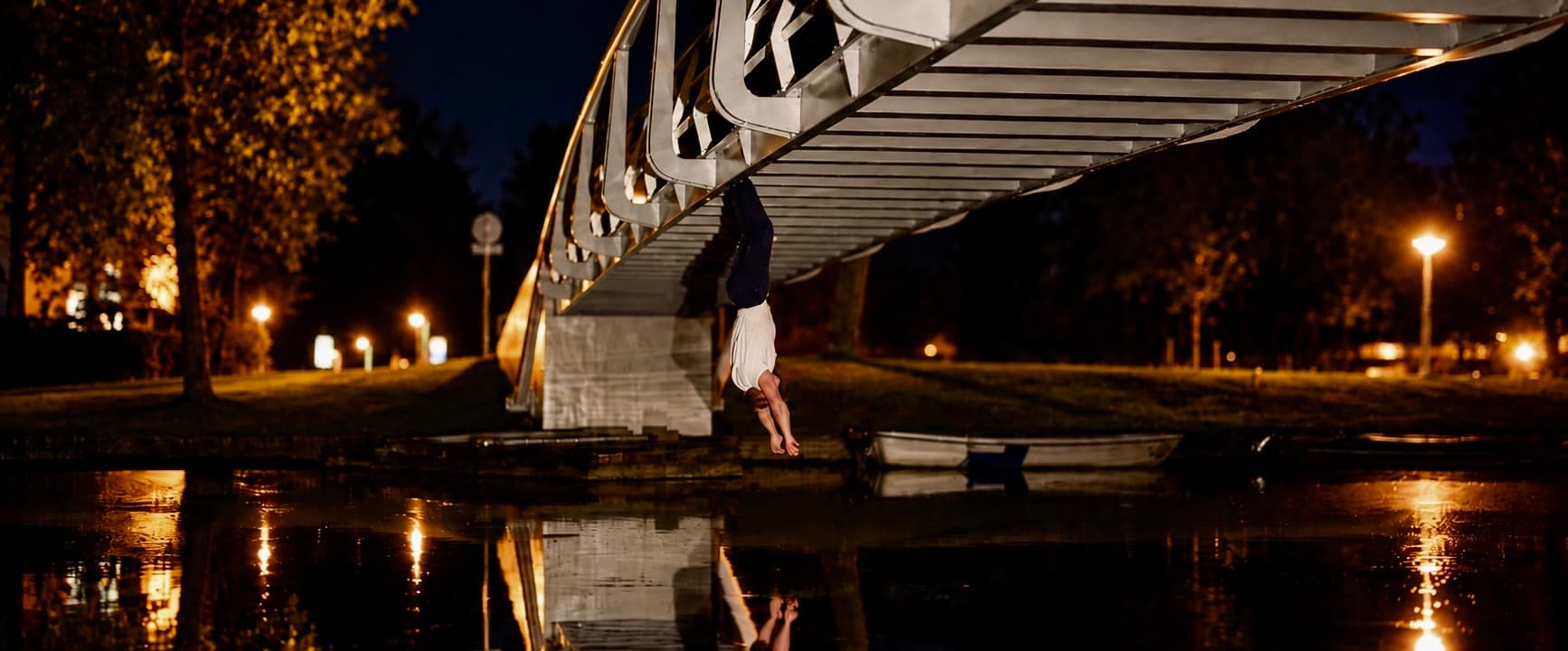
Hanging under a bridge 03
Partner Interaction
Moving with another person, where timing, pressure and intention are constantly changing.
Examples
Mirroring, counterbalancing, manipulating position, evading, striking and responding to another body.
Related to martial arts, partner dance, acro-yoga and other forms of physical play.
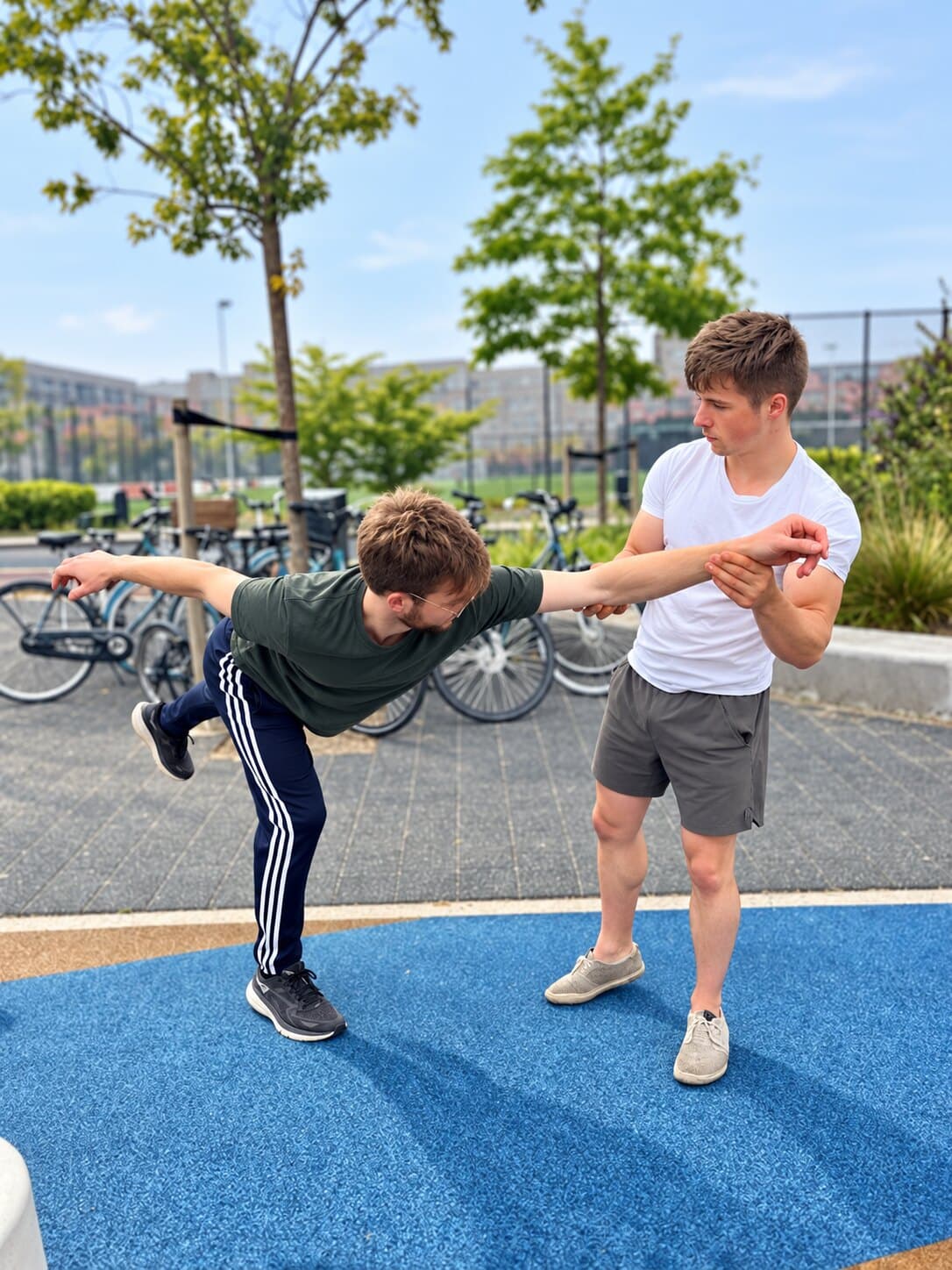
Taking a partner off balance 04
Handstands & Inversions
Learning to support, balance and move while the body’s usual relationship with gravity is reversed.
Examples
Handstands, headstands, cartwheels, bridges, rolls and basic inverted transitions.
Common in gymnastics, breakdance, capoeira and circus practice.
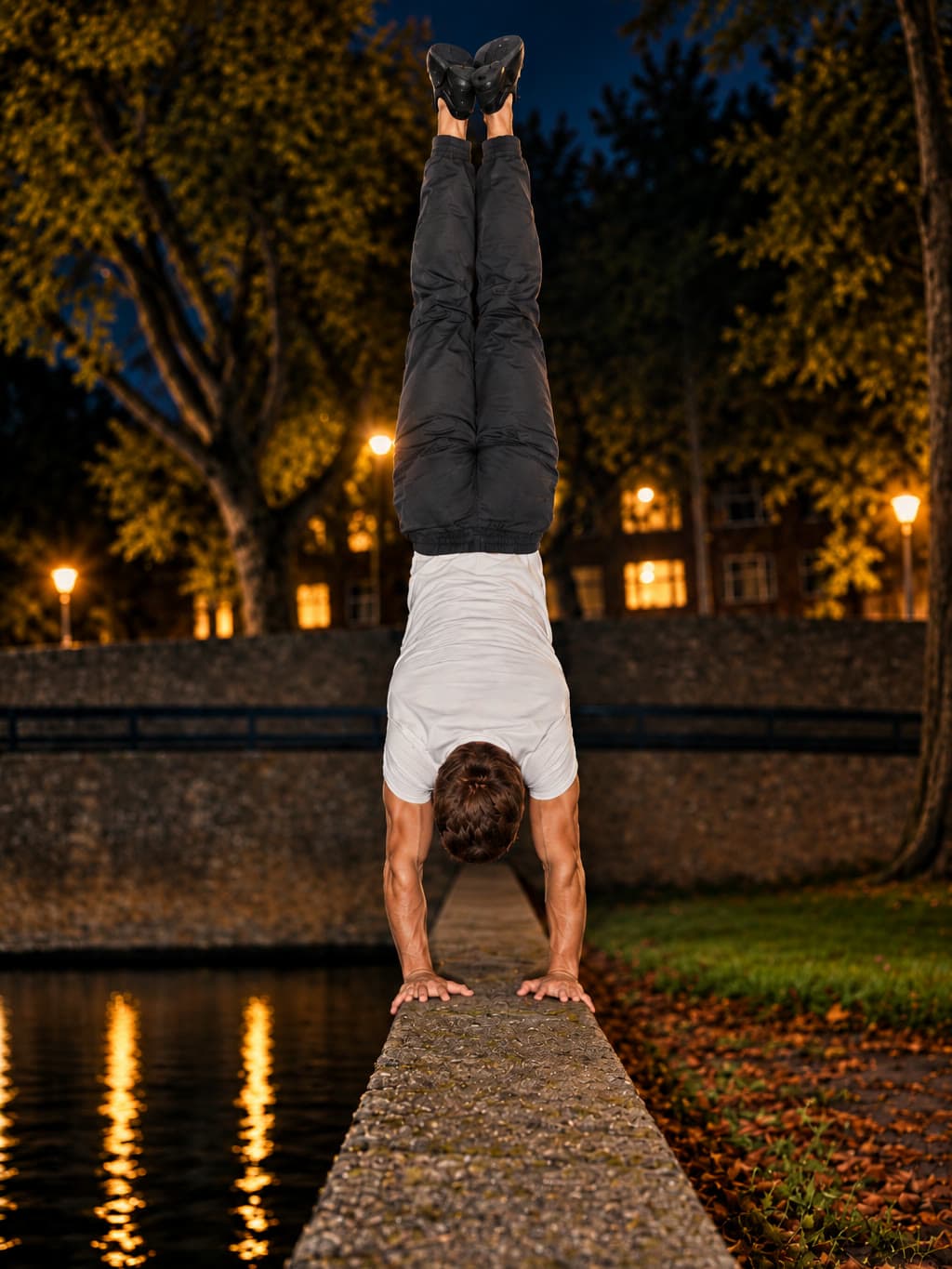
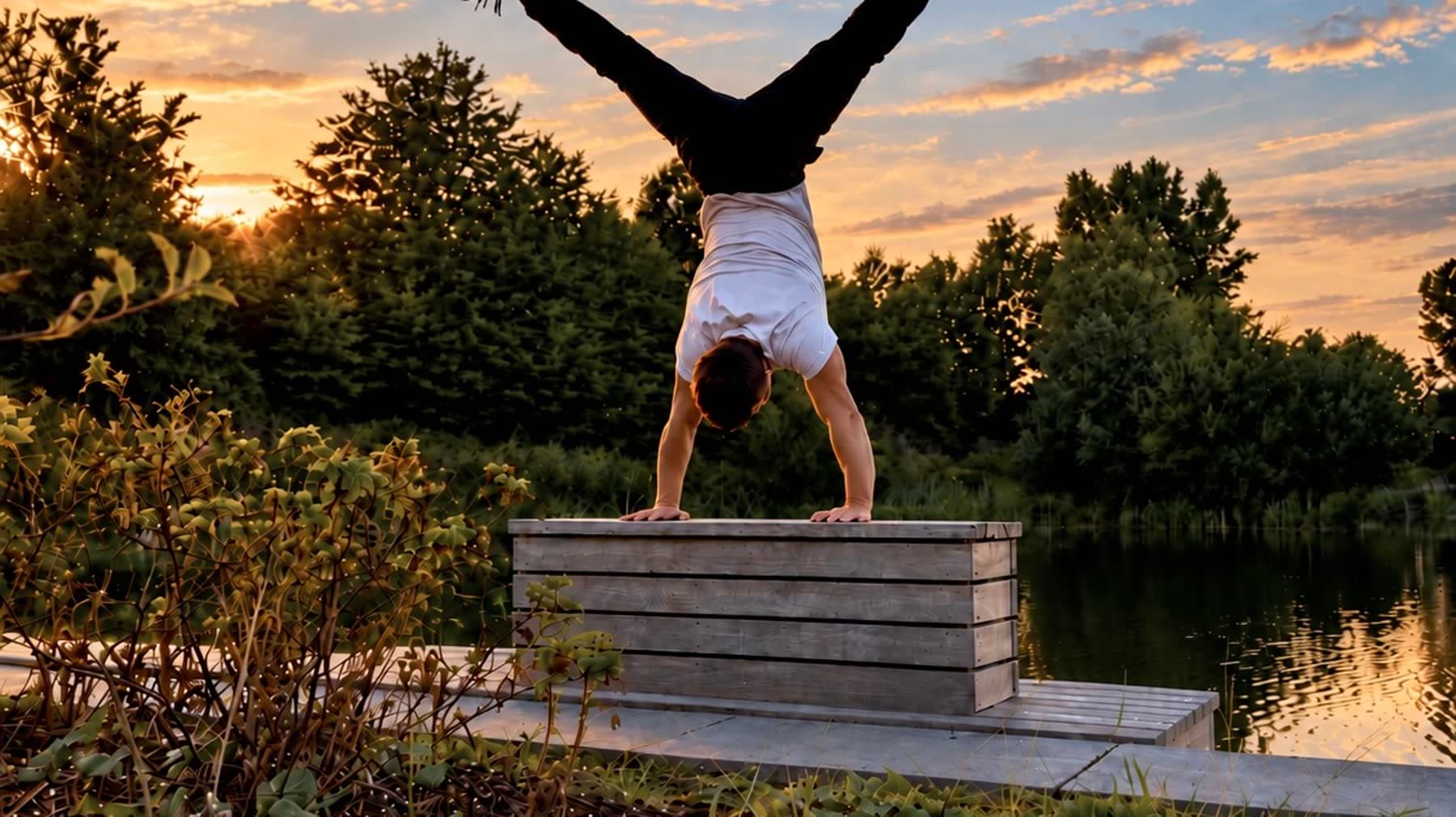
Straight handstand, canal wall coping 05
Play & Games
Using changing rules and unpredictable constraints to solve movement problems in real time.
Examples
Reacting to commands, dodging, chasing, reading space, deciding quickly and improvising.
Seen in childhood games, football, martial arts, dodgeball and many forms of physical play.
06
Throwing, Catching, Kicking & Striking
Interacting with moving objects to develop timing, accuracy, tracking and coordination.
Examples
Throwing and catching balls, kicking moving targets, striking objects and juggling.
Found in football, basketball, tennis, juggling, dodgeball and racket sports.